https://ganessolutions.com/wp-content/uploads/2026/07/GoDIEP-season-1-blog-8-image-1.png
1160
2059
Amrita
https://ganessolutions.com/wp-content/uploads/2024/03/Ganes-logo-SWAP-pay-off-rechts_Ganes-zonder-witruimte-1x.gif
Amrita2026-08-10 09:25:442026-08-10 09:38:22Episode 8 Build mental resilience: A 9-step plan for professionalsLocation: The Creative Studio
Role: Lina, Junior Designer
Status: Overwhelmed / Trusting intuition
She represents the next generation that no longer accepts the rat race. Lina is the catalyst for a new norm where identity and purpose are not sacrificed for output. She reminds the team they are human beings, not just resources.
The employee perspective and HR dilemma
Lina: All employees keep pointing at their screens. The dashboards say we are “green.” The management slides say our efficiency is at an all-time high. But when I look around the studio, I don’t see efficiency. I see people holding their breath. I thought the problem was me, but I’ve learned the “glitch” is in how we measure work. Which only benefits the company in some way and not me, the employee.
When HR leaders set out to choose an employee wellbeing platform, the process often follows a familiar pattern: download three or four comparison sheets, sit through polished demos, and select the vendor with the strongest feature list at a justifiable price point. Six months later, utilization is stuck around 20%, burnout rates haven’t moved, and nobody can explain to the board what the investment actually delivered. The problem isn’t the budget. It’s the selection criteria. HR leaders are not only looking for the right platform and data, but they also want the employees to benefit from it.
Choosing the right wellbeing software is a governance decision as much as a benefits decision. The platform you select needs to match your workforce’s actual risk profile, satisfy data privacy obligations, and produce KPIs that hold up in a board presentation, not just an HR quarterly review. Ganes Solutions’ GoDIEP platform was built around exactly this accountability standard: it combines predictive AI, culture-value alignment diagnostics, and a verified Duty of Care audit trail in a single system. That puts it in a different category from a wellness app. This article gives you the framework to distinguish between them and to evaluate any employee wellbeing platform for your company with the rigor the decision deserves.
By the end, you’ll have a structured evaluation checklist, a compliance framework, the right questions for vendor demos, and a 90-day pilot design you can implement immediately after shortlisting.
Why most wellbeing platforms don’t hold up under scrutiny
The gap between a wellness app and a governance system comes down to what the platform does before a crisis surfaces. A governance system continuously monitors energy depletion patterns, generates audit-ready documentation, and connects workforce health directly to business performance metrics. It gives managers a signal before absenteeism spikes, not a report after it does.
The shift from reactive to predictive is well underway. Emerging workforce health research and industry analysis consistently point to personalized, preventive, and measurable approaches as the most effective strategies in 2026. Organizations still running one-size-fits-all wellness programs are not just leaving money on the table; they are accumulating legal and financial risk, particularly around obligations for health data handling. The World Economic Forum has highlighted that workplace stress costs the global economy over $1 trillion in lost productivity annually, a figure that grows as technological change outpaces human adaptive capacity. Enterprise-grade support means AI-powered personalization, real-time resilience mapping across departments, and compliance documentation that withstands a legal Duty of Care inquiry.
How to choose an employee wellbeing platform: core features your evaluation must include
Feature lists from vendors can run to several pages. The practical question is which capabilities actually differentiate a platform from a glorified content library. A handful of capabilities consistently separate genuine enterprise-grade digital wellbeing platforms from the rest.
Predictive AI and early burnout detection
The single most important differentiator is whether the platform is predictive or reactive. A real-time energy depletion dashboard uses algorithm-driven detection of fatigue patterns and sends proactive alerts to managers before a team member hits a wall. When you evaluate vendors on this capability, ask them to demonstrate the model behind those signals, not just promise the outcome. Vague references to “AI-powered insights” without a methodology explanation are a red flag, not a feature.
GoDIEP’s dashboard is designed to do exactly this: it detects early depletion patterns at the individual level and generates alerts intended to give managers and employees time to act before a situation escalates. That kind of early-warning intelligence turns a wellbeing investment from a cost center into a risk management tool.
Culture-value alignment diagnostics
Many burnout cases have little to do with workload. When an employee’s personal values are misaligned with their work environment, performance and retention suffer quietly for months before anything becomes visible. Culture-match diagnostics identify this misalignment systematically, which is why this feature separates a credible mental health platform for employees from a basic digital wellbeing platform. Look for vendors who can explain how alignment scores are calculated and what intervention pathways the platform recommends when misalignment is detected.
Reporting dashboards that connect to business outcomes
A wellbeing platform is only as useful as its reporting layer. HR leaders should demand department-level dashboards, utilization data, engagement trends, and ROI-ready outputs that can be presented to the C-suite without translation or manual reformatting. If a vendor’s reporting shows participation rates but cannot connect those rates to measurable business outcomes, the platform is unlikely to survive its first board review.
Compliance and data privacy you cannot treat as secondary
Requirements are not a box-ticking exercise for employee health data. Under the Personal Data Protection Law, employee mental health data is classified as sensitive personal data, and the obligations that come with that classification are significant. Any vendor you select is processing that data as a third-party processor, which means your organization retains controller responsibility for how it’s handled.
The key requirements include a lawful basis for processing, purpose limitation, strong technical and organizational security measures, breach notification obligations, and, for high-risk processing, a Data Protection Impact Assessment. Critically, health information generally cannot be stored or transferred outside your region without specific legal approval. Let’s say you are based in the UAE; this may disqualify a number of international platforms whose data residency defaults to servers in the US or Europe. Any vendor that cannot demonstrate UAE-compliant data residency options should be removed from your shortlist immediately.
For organizations with international operations, GDPR adds a second compliance layer. A verified Duty of Care audit trail matters here both legally and commercially: it transforms your wellbeing investment into a defensible record that your organization exercised its obligation to protect employee psychological safety. GoDIEP is built on frameworks aligned with European GDPR principles and ISO standards, with data residency options designed to address both UAE PDPL requirements and international frameworks. That kind of compliance architecture is what distinguishes enterprise-grade corporate wellbeing software from lightweight HR wellness tools.
Integration capabilities and total cost of ownership
A wellbeing platform that doesn’t connect to your existing HR stack creates more administrative work than it eliminates. The standard integration requirements for any serious vendor are non-negotiable: HRIS sync for employee roster and eligibility management, SAML 2.0 or OpenID Connect-based SSO through providers like Microsoft Entra ID or Okta, SCIM 2.0 for automated user provisioning, and analytics outputs that connect to your existing workforce dashboards. Platforms without pre-built connectors to major HRIS systems will add internal IT cost and drag implementation timelines from weeks to months.
On total cost of ownership, the headline PEPM fee is rarely the full story. Platform licensing can vary widely depending on service depth and vendor model, some platform-only solutions start at the lower end of the market, while full-service managed programs reach significantly higher per-employee costs. A practical budgeting rule: treat the software-only PEPM as the floor, then plan for two to ten times that figure once coaching, screening, incentives, and program management are included.
For a 500-employee organization, a full-program budget including coaching and implementation can reach the mid-six figures annually. For 1,000 employees, the range is roughly $300,000 to $800,000 per year, with enterprise implementations at the higher end of scope landing closer to $1.2 million. These numbers are not arguments against investing. Workforce research consistently estimates that the productivity and turnover costs of unaddressed burnout run into the hundreds of thousands of dollars annually for even mid-sized teams. The math favors prevention.
Building your vendor shortlist and running a focused pilot
Before you shortlist any vendor, prepare a set of questions that expose real capability gaps rather than testing whether a sales team can deliver a polished presentation. Industry comparison lists can help you create an initial vendor universe; for example see the top corporate wellness platforms to understand how vendors position against one another. Bring these into every evaluation conversation:
- How does your platform detect burnout risk before absenteeism appears, and what model drives those signals?
- What is your data residency model for your region-based organizations, and can you provide documentation of PDPL compliance?
- How do you document Duty of Care compliance, and what format does that audit trail take?
- Can your reporting layer connect to our existing HRIS without custom development, and how long does that integration typically take?
- What does a typical implementation timeline look like for an organization of our size, and what internal resources do you assume on our side?
These questions separate vendors with genuine enterprise capability from those selling polished demos backed by thin infrastructure. Any vendor that deflects or generalizes on compliance and data residency questions should be removed from consideration.
For a 90-day pilot, anchor your measurement around three specific metrics: early engagement rate across the target teams, at least one documented instance where a predictive alert led to a manager intervention before a situation escalated, and a baseline-versus-pilot comparison on a measurable KPI such as absenteeism rate or team energy scores. GoDIEP is designed to deliver exactly this kind of proof-of-concept structure, combining culture-value alignment diagnostics with real-time resilience mapping from week one. That means you’re not waiting until month six to find out whether the platform works.
WORKLOAD REALITY CHECK FOR YOUR EMPLOYEES- GODIEP TOOLBOX
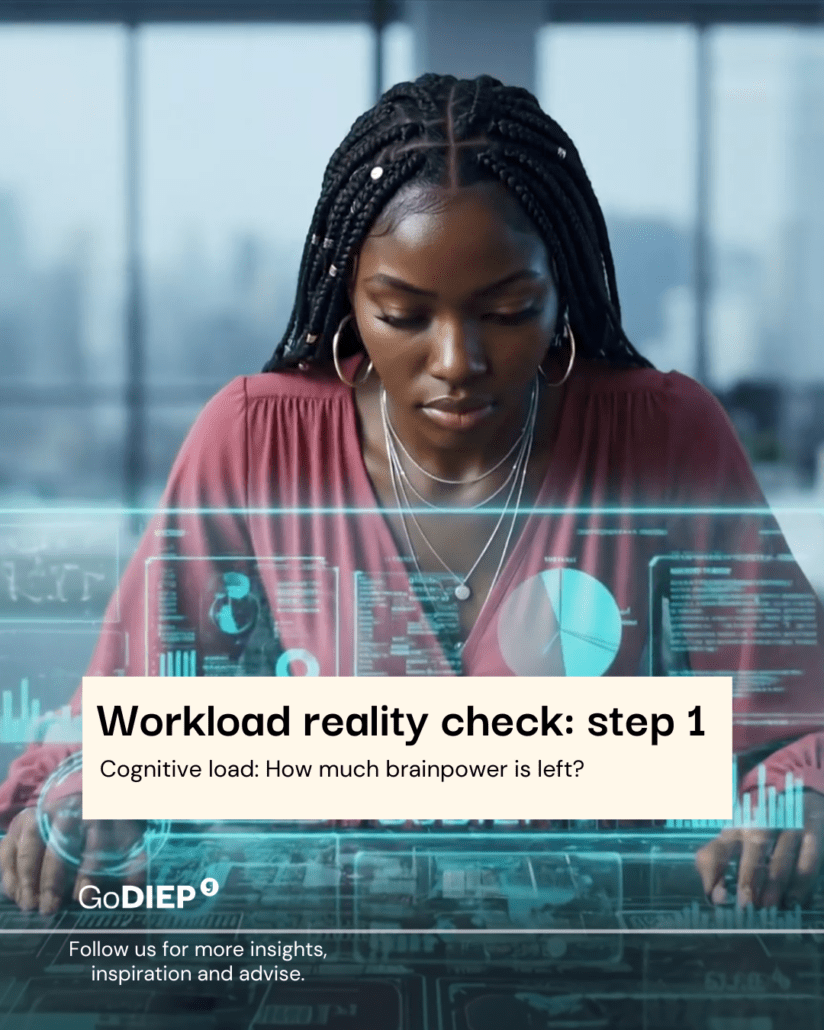
As for Lina as an employee, she can run a Workload reality check. This GoDIEP tool is about measuring the ‘felt’ weight of the work.
1. Cognitive load: How much brainpower is left?
2. Emotional friction: Is the system dragging me down?
3. Recovery debt: How long to recharge? It turns a “gut feeling” into actionable data.
ROI benchmarks and how to make a confident final call
The evidence landscape on wellbeing platform ROI is more nuanced than vendors typically present. Meta-analytic literature supports modest positive effects for well-designed programs on absenteeism and health behaviors. However, a significant randomized controlled trial found that generic wellness programs produced no measurable effect on employee productivity after 30 months. That finding is not an argument against investing in workforce wellbeing. It is a precise argument for investing in predictive, personalized platforms rather than reactive, one-size-fits-all ones.
When building your business case, benchmark both the cost of the program and the cost of inaction. Published research on turnover and absenteeism consistently shows that unaddressed workforce health issues represent a substantial quantifiable liability, one that scales with headcount. The financial case for a governance-grade employee wellness solution is a straightforward comparison between a known investment and a calculable risk exposure.
Red flags that should stop a procurement decision include vague AI claims without a model explanation, no data residency flexibility for UAE operations, no Duty of Care documentation capability, and implementation timelines that assume IT resources the vendor hasn’t scoped. A credible wellbeing vendor comparison includes measurable outcomes from similar-sized organizations, not just testimonial quotes and case study headlines. If a vendor cannot show you the data behind their claims, that is the answer you need. For an extended discussion on how HR data practices can silence employees, see Episode 5: The cost of silence.
Your next step toward a governance-grade decision
This framework gives you a structured path from procurement confusion to a confident decision. Start by evaluating platforms on strategic features: predictive AI, culture-value alignment, and business-connected reporting. Confirm compliance with regional requirements and international data privacy obligations. Assess integration depth against your existing HR stack. Calculate true total cost of ownership, not just the headline PEPM. Then run a 90-day pilot built around measurable KPIs before committing to a multi-year contract.
The UAE’s regulatory environment is evolving rapidly, and the expectation from boards and regulators that organizations demonstrate proactive Duty of Care is no longer a future concern. It is a present accountability standard. Choosing the wrong employee wellbeing platform delivers participation theater. Choosing the right one delivers early-warning intelligence, legal defensibility, and a direct line between workforce health and business performance. Employers should also be aware of recent legal developments, including UAE’s new mental health law implications for employers, which will further shape obligations around workplace mental health support.
Ganes Solutions’ GoDIEP platform was built for this accountability standard from the ground up. If you’re ready to move from feature comparison to a structured evaluation of how to choose an employee wellbeing platform for your company, request a GoDIEP platform walkthrough or download this blog to start your vendor evaluation, use it as a checklist to start your shortlist with the right criteria already in place.