 https://ganessolutions.com/wp-content/uploads/2026/07/GoDIEP-season-1-blog-8-image-blog.png
1161
2059
Amrita
https://ganessolutions.com/wp-content/uploads/2024/03/Ganes-logo-SWAP-pay-off-rechts_Ganes-zonder-witruimte-1x.gif
Amrita2026-08-20 16:00:332026-08-20 16:54:30Episode 9 AI vs human career coaching: which one is right for you?
https://ganessolutions.com/wp-content/uploads/2026/07/GoDIEP-season-1-blog-8-image-blog.png
1161
2059
Amrita
https://ganessolutions.com/wp-content/uploads/2024/03/Ganes-logo-SWAP-pay-off-rechts_Ganes-zonder-witruimte-1x.gif
Amrita2026-08-20 16:00:332026-08-20 16:54:30Episode 9 AI vs human career coaching: which one is right for you?
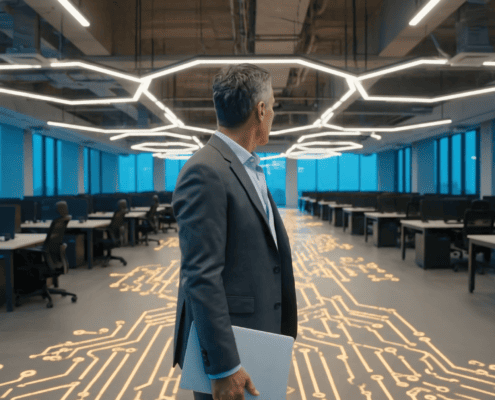
Ricardo, senior manager
Location: The Glass Tower, Executive Boardroom
Status: Confronting decision fatigue
I didn’t care about the whispers in the breakroom or the exhausted stares from my team. My job isn’t to be liked; it’s to deliver. I refreshed my laptop one last time. There it was: the milestone hit, the targets smashed. I slammed my laptop shut with a smirk. I had pushed them, ignored their complaints about “balance,” and demanded the impossible. And I won. I stepped out into the corridor, ready to gloat, to show them that my “ruthless” approach was the only thing that actually moved the needle.
Professionals and HR leaders are increasingly facing a more specific question than simply whether to invest in professional development. The real decision is whether to deploy an AI coaching system that operates at 2 a.m., scales to 500 employees, and feeds data back to your HR dashboard, or to invest in a certified human coach who reads emotional undercurrents and challenges assumptions in ways that feel genuinely safe. This article compares AI coaching versus traditional career coach models (ai coaching versus traditional career coaching ) for professionals, using peer-reviewed evidence, current pricing data, and specific compliance requirements. Both approaches have clear limits. The wrong choice wastes budget, stalls career growth, and in enterprise settings, creates real legal exposure, including PDPL non-compliance, biased automated decision risk, and potential employment disputes.
The market has fragmented fast. Basic chatbot tools sit at one end; sophisticated enterprise platforms occupy the other, with everything in between claiming to be the answer. Ganes Solutions developed GoDIEP to address a genuine gap: the architecture that connects AI scale with the human depth that complex workforce development actually requires. That context matters as you work through the comparison below.
By the end of this article, you can map your specific career stage or company need to the right coaching model, and you will have a practical checklist to guide that decision.
What AI coaching and human coaching actually offer
AI career coaching platforms use natural language processing and behavioral algorithms to deliver structured coaching conversations, track goal progress, and surface personalized insights on demand. The best systems operate 24/7, scale across hundreds of employees simultaneously, and push real-time data to HR dashboards. Quality ranges widely, from basic chatbot flows that follow a script to sophisticated predictive systems that identify energy depletion before performance drops. When evaluating options, the distinction between automated coaching platforms and genuine AI-driven development tools matters significantly for enterprise outcomes.
A certified human career coach brings something different: active listening, situational judgment, and genuine accountability. Accredited coaches follow ethical frameworks, adapt to the emotional undercurrents in a conversation, and can challenge a client’s thinking in ways that feel growth-oriented rather than algorithmic. The relationship itself is a core part of what makes the intervention work, not just a delivery vehicle for structured content.
What the research actually says about coaching outcomes
Two longitudinal randomized controlled trials, each running ten months across multiple time-points, produced a result that surprised many HR professionals: both human and AI coaches generated statistically equivalent improvements in structured goal attainment. Effect sizes were η² = 0.265 for human coaches and η² = 0.269 for AI (De Haan et al., randomized controlled trial). For well-defined career goals, an AI coaching system is not inferior to a certified human coach.
Where human coaches outperform AI: complex and emotionally charged work
The picture shifts significantly when coaching work becomes more complex. In business coaching cases involving team dynamics, organizational politics, or high-stakes leadership transitions, human coaches show 71 to 86 percent goal completion rates compared to 42 to 58 percent for AI-only approaches. Research on working alliance, the collaborative bond between coach and client, is mixed: one study (PMC12044884) found no significant difference between AI and human coaches on relationship quality, while a contrasting single-session study found that human coaches scored substantially higher on commitment and alliance from the outset. These findings align with industry commentary that while AI can scale much of the work, humans still matter for nuance and judgment.
AI is sufficient for structured goal work, skill-building, and self-awareness development. Human expertise becomes necessary the moment the work is emotionally charged, organizationally complex, or involves genuine identity-level decisions. Knowing where your
Cost and access: real numbers for professionals in 2026
AI coaching platforms in 2026 range from $100 to $200 per seat per month excluding executive-grade products with integrated management components. A 200-person company with 30 managers and five senior leaders typically spends $99,000 to $350,000 per year all-in for an AI coaching platform, covering every employee with meaningful access to development support.
Certified career coaches charge very differently. Prices run from $140 to $250 per hour, with executive and senior-career specialists reaching $350 to $500 per hour in corporate settings. A standard engagement of 8 to 10 sessions runs $1,500 to $4,000 per executive per month. For five senior leaders in live 1:1 coaching, the annual cost sits between $90,000 and $240,000, covering only those five people.
The cost efficiency argument for AI coaching is real. Based on comparative outcome data from the RCTs referenced above, AI coaching delivers approximately 60 to 70 percent of the development outcome at roughly 5 to 8 percent of the cost of live executive coaching. For HR leaders scaling professional development across departments, that gap is decisive, but only when the use case actually fits.
Matching the right coaching model to your career stage
For entry-level and early-career professionals, AI coaching is well-suited. Self-awareness tools, structured skill-building, goal-tracking, and on-demand feedback serve early-career needs effectively. The scalability of AI also means companies can offer development access to every employee rather than reserving it for managers and executives, which creates a stronger development culture across the board, and supports efforts to transform your HR with inclusive strategies.
Mid-career managers building leadership capability benefit most from a hybrid coaching model. GoDIEP gives the hybrid coaching also with AI tools. It delivers personalized content based on 360-degree inputs, and flag early warning signs of energy depletion or stalled progress. Human beings step in for leadership identity work, team conflict resolution, or career direction conversations that require genuine judgment. AI tracks the pattern; human beings analyse the data and step into dialogue.
Senior executives and anyone navigating a high-stakes career transition need human expertise. Research consistently shows that executive coaching involving identity, power dynamics, office politics, and emotionally ambivalent decisions requires depth that current AI systems cannot replicate. AI tools can support data tracking and goal sharpening around those conversations, but they should not lead them.
Privacy, data, and legal compliance
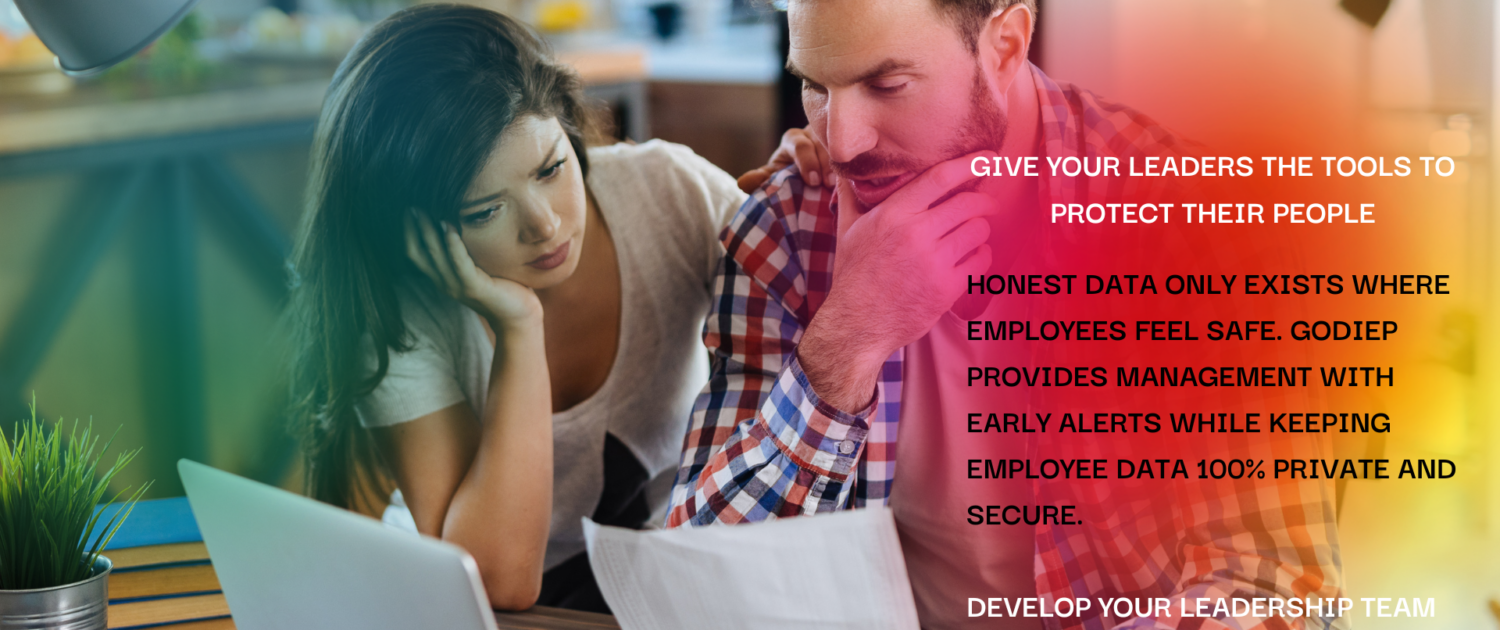
HR leaders cannot treat data compliance as an afterthought when deploying AI coaching tools. For example, under UAE Federal Decree-Law No. 45 of 2021 on the Protection of Personal Data (PDPL), companies must establish a lawful basis for processing employee data, most commonly explicit consent, before using AI coaching platforms. Employers must apply data minimization principles, meaning the platform collects only what is strictly necessary for the stated coaching purpose, and must provide employees with clear rights to access and delete their data. In some contexts, contractual necessity or legitimate interest may serve as the lawful basis, though legal counsel should confirm the applicable basis for your specific deployment. For practical guidance, review the UAE Data Privacy Responsible AI Handbook. And toe be honest, this should be standard in every country. The EU is already sharpening the legislation regarding use of AI and GDPR is a must have.
Compliance requirements for AI coaching deployments
We advice companies to conduct a Data Protection Impact Assessment (DPIA) before deploying any AI system that performs high-risk automated evaluation of personal aspects of employees, such as performance, wellbeing, or career progression. Automated decisions that significantly affect an employee’s record must allow for human review. Employers who deploy AI coaching without these safeguards might face financial penalties and potential employment disputes. You should also evaluate your monitoring practices against local guidance on legislation such as UAE employee monitoring laws to ensure lawful processing and transparency.
Make sure to verify that it maintains a verifiable consent trail, stores data in secure jurisdictions, and aligns with both PDPL and GDPR where international data flows are involved. Platforms that generate, let’s say, a Duty of Care audit trail provide legal defensibility should an employment dispute ever implicate coaching decisions or mental health interventions. In 2026, that is a baseline requirement, not a premium feature.
How GoDIEP resolves the trade-off between AI scale and human depth
Standard AI coaching platforms optimize for scalability but typically lack the scientific methodology and organizational intelligence that genuine workforce development requires. Traditional human coaching is powerful and expensive, inconsistent at scale, and generates no auditable organizational data that HR or the C-suite can act on. Neither model alone meets the full needs of enterprise people management in 2026, particularly for UAE organizations navigating rapid technological change alongside strict data compliance obligations.
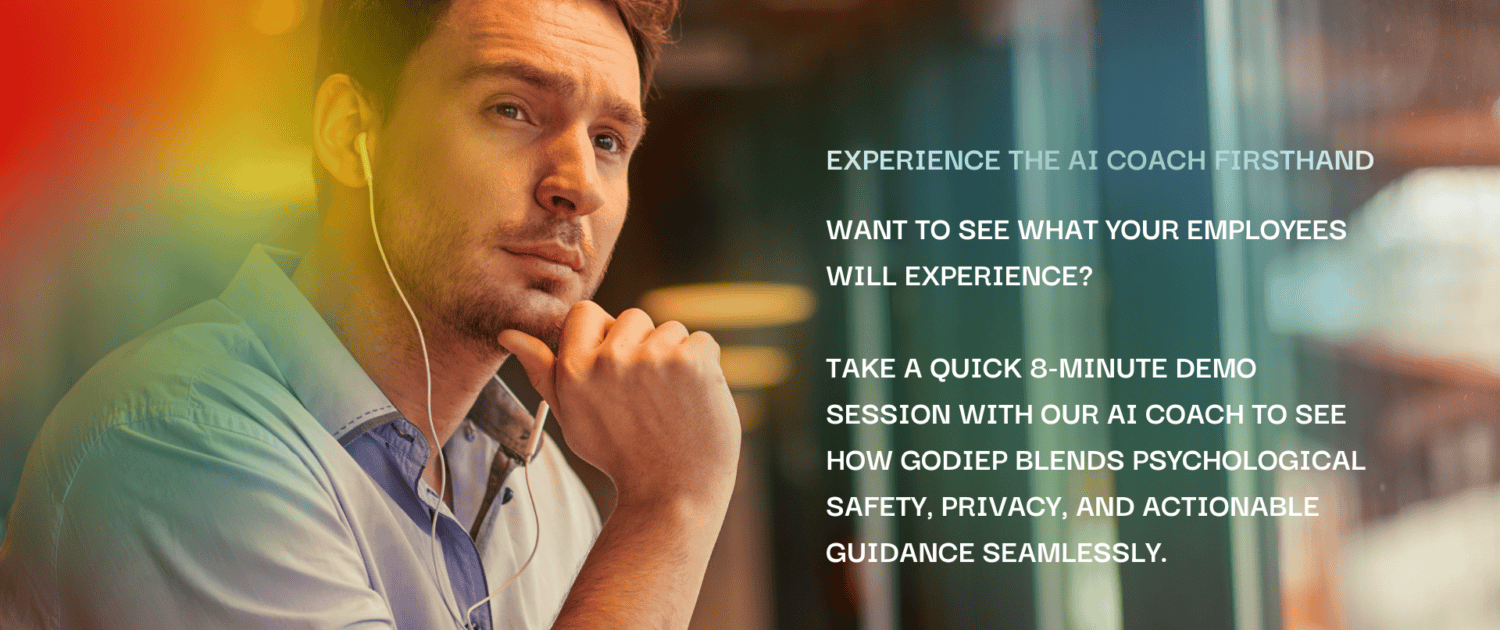
Ganes Solutions built GoDIEP with a different architecture in mind. Its Predictive AI Mentor delivers real-time, personalized career and wellbeing support between key moments in an employee’s development cycle. Culture match diagnostics identify value-environment misalignment before it escalates to burnout, and the Energy depletion dashboard surfaces early warning signals at both individual and department level, giving managers actionable intelligence rather than lagging indicators.
GoDIEP is designed to generate a GDPR and ISO-aligned Duty of Care audit trail built to satisfy both PDPL requirements and C-suite risk management demands, positioning employee mental health as a measurable, governance-ready business asset rather than a soft concern. Companies evaluating the platform should review vendor technical documentation and applicable compliance certifications for their specific deployment context.
Before committing to any coaching model, whether AI, human, or hybrid, run through this checklist. What career stage and goal complexity are involved? What is the realistic budget per seat or per employee? Does the platform meet consent and data minimization requirements? Does the com[any need population-level analytics beyond individual coaching outcomes? Is there a compliance trail if the intervention is scrutinized by legal or senior leadership? If any of those answers reveal a gap in your current approach, that is where the conversation with GoDIEP starts.
The choice that is no longer a compromise
Standard AI coaching platforms optimize for scalability but typically lack the scientific methodology and organizational intelligence that genuine workforce development requires. Traditional human coaching is powerful and expensive, inconsistent at scale, and generates no auditable organizational data that HR or the C-suite can act on. Neither model alone meets the full needs of enterprise people management in 2026, particularly for UAE organizations navigating rapid technological change alongside strict data compliance obligations.
Ganes Solutions built GoDIEP with a different architecture in mind. Its Predictive AI Mentor delivers real-time, personalized career and wellbeing support between key moments in an employee’s development cycle. Culture match diagnostics identify value-environment misalignment before it escalates to burnout, and the Energy depletion dashboard surfaces early warning signals at both individual and department level, giving managers actionable intelligence rather than lagging indicators.
GoDIEP is designed to generate a GDPR and ISO-aligned Duty of Care audit trail built to satisfy both PDPL requirements and C-suite risk management demands, positioning employee mental health as a measurable, governance-ready business asset rather than a soft concern. Companies evaluating the platform should review vendor technical documentation and applicable compliance certifications for their specific deployment context.
Before committing to any coaching model, whether AI, human, or hybrid, run through this checklist. What career stage and goal complexity are involved? What is the realistic budget per seat or per employee? Does the platform meet consent and data minimization requirements? Does the com[any need population-level analytics beyond individual coaching outcomes? Is there a compliance trail if the intervention is scrutinized by legal or senior leadership? If any of those answers reveal a gap in your current approach, that is where the conversation with GoDIEP starts.
Get inspired by our Insights
https://ganessolutions.com/wp-content/uploads/2026/07/GoDIEP-season-1-blog-8-image-blog.png
1161
2059
Amrita
https://ganessolutions.com/wp-content/uploads/2024/03/Ganes-logo-SWAP-pay-off-rechts_Ganes-zonder-witruimte-1x.gif
Amrita2026-08-20 16:00:332026-08-20 16:54:30Episode 9 AI vs human career coaching: which one is right for you? https://ganessolutions.com/wp-content/uploads/2026/07/GoDIEP-season-1-blog-8-image-1.png
1160
2059
Amrita
https://ganessolutions.com/wp-content/uploads/2024/03/Ganes-logo-SWAP-pay-off-rechts_Ganes-zonder-witruimte-1x.gif
Amrita2026-08-10 09:25:442026-08-10 09:38:22Episode 8 Build mental resilience: A 9-step plan for professionals
https://ganessolutions.com/wp-content/uploads/2026/07/GoDIEP-season-1-blog-8-image-1.png
1160
2059
Amrita
https://ganessolutions.com/wp-content/uploads/2024/03/Ganes-logo-SWAP-pay-off-rechts_Ganes-zonder-witruimte-1x.gif
Amrita2026-08-10 09:25:442026-08-10 09:38:22Episode 8 Build mental resilience: A 9-step plan for professionals https://ganessolutions.com/wp-content/uploads/2026/07/GoDIEP-season-1-blog-7-blog-image.png
1163
2070
Amrita
https://ganessolutions.com/wp-content/uploads/2024/03/Ganes-logo-SWAP-pay-off-rechts_Ganes-zonder-witruimte-1x.gif
Amrita2026-07-27 14:55:322026-07-28 14:44:20Episode 7 How to stay focused at work without burning out
https://ganessolutions.com/wp-content/uploads/2026/07/GoDIEP-season-1-blog-7-blog-image.png
1163
2070
Amrita
https://ganessolutions.com/wp-content/uploads/2024/03/Ganes-logo-SWAP-pay-off-rechts_Ganes-zonder-witruimte-1x.gif
Amrita2026-07-27 14:55:322026-07-28 14:44:20Episode 7 How to stay focused at work without burning out
