Capacity governance
Measuring digital friction and workload density before assigning new AI-driven targets.

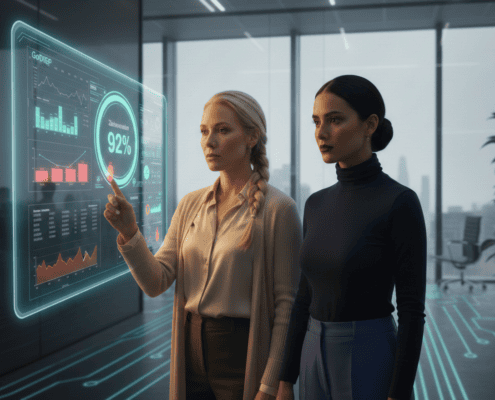
High above the city, inside executive boardrooms, corporate dashboards often look completely spotless. Productivity metrics show steady green checks, key performance indicators are consistently met, and employee engagement scores appear stable on paper. Yet, right underneath that polished surface, a silent warning frequently flashes across modern corporate systems: burnout detected.
We stand at a pivotal moment in corporate history. Enterprise leaders are told that artificial intelligence will unlock unprecedented speed, optimize workflows, and free human potential. Yet, across boardrooms and Slack channels, a quieter, more alarming narrative is unfolding.
AI tools are deployed at a record pace, but workforce capacity remains finite. When companies introduce powerful technology into an already overloaded culture, they accelerate burnout. Ethical AI in HR is not merely a technical or compliance discussion. It is a cultural symptom of how we value human energy in an era of digital velocity.
Behind closed doors in modern executive boardrooms, two distinct emotional worlds frequently collide:
On one side, executive teams experience a quiet sense of helplessness and pressure. Board members face demands to deliver financial growth and integrate new technologies, while fearing that critical strategic projects will stall due to invisible team resistance. To maintain control, management often doubles down on rigid metrics and automated productivity checklists.

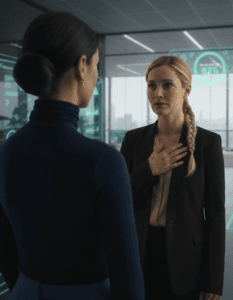
In high-pressure enterprise environments, high performers adapt to rising tech expectations by masking their cognitive fatigue. They absorb the operational friction, double down on digital output, and maintain the appearance of seamless delivery.
“We have rewarded the mask of productivity so heavily that we have made the price of humanity—the true cost of human energy, an invisible operational loss.”
When tech velocity outpaces biological capacity, silent friction turns into sudden talent churn. Managing ethical AI requires looking beyond simple productivity metrics and measuring the hidden capacity debt beneath the surface.
Ethical governance requires shifting from reactive oversight to proactive capacity management. To build an enterprise that scales without burning out its people, leaders must establish three core pillars:
With the godiep platform, enterprise leaders gain access to anonymized micro-logs that reveal workload stress across departments in real time. Instead of waiting for a formal sick note to land on an hr director’s desk, executive teams can identify burnout risks.

Protecting human potential in the age of AI is a strategic imperative. When leadership aligns technological speed with human energy, the return is immediate:
34% reduction in sick leave and burnout risk
11 days’ early detection of operational energy leaks
Seamless adoption of new technology without change fatigue
To learn how to integrate these insights seamlessly into an enterprise transformation roadmap, explore these workforce strategy solutions. Protecting human capacity is not a soft wellness gesture. It drives sustainable business performance.
 https://ganessolutions.com/wp-content/uploads/2026/09/13-scene-image-1-1.png
960
1088
Amrita
https://ganessolutions.com/wp-content/uploads/2024/03/Ganes-logo-SWAP-pay-off-rechts_Ganes-zonder-witruimte-1x.gif
Amrita2026-10-21 07:00:102026-10-11 20:22:38Episode 13 Ethical AI in HR: the cultural symptom
 https://ganessolutions.com/wp-content/uploads/2026/07/GoDIEP-season-1-blog-11-full-image-blog.png
1171
2080
Amrita
https://ganessolutions.com/wp-content/uploads/2024/03/Ganes-logo-SWAP-pay-off-rechts_Ganes-zonder-witruimte-1x.gif
Amrita2026-10-14 07:00:582026-10-11 20:21:43Episode 12 Talent silencing: why your best people stop speaking
 https://ganessolutions.com/wp-content/uploads/2026/09/GoDIEP-season-1-blog-11-blog-image.png
1164
2073
Amrita
https://ganessolutions.com/wp-content/uploads/2024/03/Ganes-logo-SWAP-pay-off-rechts_Ganes-zonder-witruimte-1x.gif
Amrita2026-09-11 07:00:352026-10-11 20:18:47Episode 11 When HR data makes your best employees invisible

