What is the ‘Invisible Load’ in modern workflows?
The Invisible Load refers to the constant mental weight of managing micro-tasks, continuous digital notifications, and 24/7 connectivity expectations that drain cognitive energy silently.

A master of logic who discovers that precision without context is a hollow truth. She uses the talent SWOT analysis to rediscover her own analytical strengths, but learns that true operational excellence begins with personal boundaries.
“As an Operations expert, I know that efficiency is about the load on the processor. Yet, we rarely discuss the Invisible Load: the mental weight of managing micro-tasks and 24/7 notifications. On corporate dashboards, rows of green indicators and completed sprint milestones look perfect to the executive committee. But on the floor, we are running on fumes. As humans we are not designed to process a constant digital noise. Every ‘ping’ is a cognitive tax we pay with our focus. It creates a ‘systemic drag’ that slows down the most brilliant strategy. Precision without context is a hollow truth, and true operational excellence begins with personal boundaries.”

Company leadership teams, CEOs, and CHROs regularly monitor high-level HR analytics, operational milestones, and employee engagement metrics. When these data streams show green, leadership naturally assumes that organizational workflows function perfectly. However, a substantial, invisible divide exists between top-level corporate indicators and the daily pressure experienced by employees.
We define this structural friction as The Perception Gap: the discrepancy between reported dashboard metrics and the actual human exhaustion occurring within technical and operational teams.
When organizational design and workplace culture prioritize metric-driven compliance over sustainable human capacity, companies fall victim to The Energy Paradox. This systemic failure occurs when data monitoring fields display excellent efficiency statistics while the workforce operates on completely drained biological reserves, masking real employee turnover risks and burnout liabilities under superficial data fields.
The corporate conversation surrounding the Future of Work heavily emphasizes digital transformation, agile change management, and hybrid work models. While these modern frameworks offer excellent agility, they simultaneously introduce hidden corporate liabilities. The combination of remote availability and an ‘always-on’ corporate culture erases the boundaries between professional responsibilities and crucial physiological recovery.
For knowledge workers navigating these digital environments, continuous exposure to unmanaged workplace stress manifests as severe cognitive fragmentation. We define this state as Algorithmic Overload: the operational condition where the sheer volume of digital inputs, chat notifications, constant messaging loops, and shifting priorities outpaces human cognitive processing speed.
People think multitasking is a skill. In strategy, we know it’s a glitch. Every unannounced digital notification, urgent message, or unscheduled alignment call forces an immediate cognitive pivot. Research shows it takes an average of 23 minutes and 15 seconds to get back to deep focus after a single interruption.
When multiplied across complex project teams and entire working weeks, this context-switching tax creates a massive drain on overall operational efficiency. We are losing hours of innovation every day to ‘quick questions’. If organizations do not protect the “Deep Work” zones, the ROI on talent will continue to plummet.
When you need to ground yourself before the meetings





Traditional metrics assess final output while ignoring the human depreciation required to achieve it. Progressive organizations must shift toward Human Capital Governance: a strategic framework that measures, protects, and optimizes collective mental energy alongside traditional performance metrics.
To close the gap between rapid change management and human capacity, leaders must introduce tactical grounding tools alongside structural workflow protections. The 5×5 check-in is a great example of a grounding tool.
Furthermore, leadership must support these personal boundaries with organizational guardrails to reduce the Systemic Drag:
Track energy capacity over engagement metrics: Replace ambiguous, self-reported metrics with concrete workplace assessment trends to capture under-the-surface cognitive fatigue.
Establish focus autonomy: Designate specific, uninterrupted blocks of time dedicated entirely to deep analytical work. Block internal messaging platforms during these windows to let teams execute complex tasks without continuous distraction.
Rationalize the communication ecosystem: Audit internal communication channels to reduce unnecessary updates. Shift from synchronous chat expectations to structured, asynchronous documentation, allowing professionals to address messages deliberately rather than reactively.
 https://ganessolutions.com/wp-content/uploads/2026/06/Naamloze-video-Google-Vids-06-blog-image.png
1036
1854
Amrita
https://ganessolutions.com/wp-content/uploads/2024/03/Ganes-logo-SWAP-pay-off-rechts_Ganes-zonder-witruimte-1x.gif
Amrita2026-07-02 06:06:362026-07-02 06:06:36Episode 6 How to choose an employee wellbeing platform that delivers
https://ganessolutions.com/wp-content/uploads/2026/06/Naamloze-video-Google-Vids-06-blog-image.png
1036
1854
Amrita
https://ganessolutions.com/wp-content/uploads/2024/03/Ganes-logo-SWAP-pay-off-rechts_Ganes-zonder-witruimte-1x.gif
Amrita2026-07-02 06:06:362026-07-02 06:06:36Episode 6 How to choose an employee wellbeing platform that delivers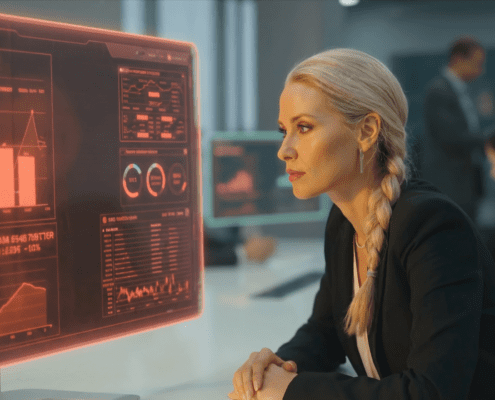 https://ganessolutions.com/wp-content/uploads/2026/05/GoDIEP-season-1-blog-5-full-image.png
1040
1861
Amrita
https://ganessolutions.com/wp-content/uploads/2024/03/Ganes-logo-SWAP-pay-off-rechts_Ganes-zonder-witruimte-1x.gif
Amrita2026-05-25 17:08:572026-05-25 17:08:57Episode 5 The cost of silence: when hr data supremacy causes talent-silencing
https://ganessolutions.com/wp-content/uploads/2026/05/GoDIEP-season-1-blog-5-full-image.png
1040
1861
Amrita
https://ganessolutions.com/wp-content/uploads/2024/03/Ganes-logo-SWAP-pay-off-rechts_Ganes-zonder-witruimte-1x.gif
Amrita2026-05-25 17:08:572026-05-25 17:08:57Episode 5 The cost of silence: when hr data supremacy causes talent-silencing https://ganessolutions.com/wp-content/uploads/2026/05/GoDIEP-season-1-blog-4-image.png
1037
1852
Amrita
https://ganessolutions.com/wp-content/uploads/2024/03/Ganes-logo-SWAP-pay-off-rechts_Ganes-zonder-witruimte-1x.gif
Amrita2026-05-25 16:41:312026-05-25 16:41:31Episode 4 The high cost of ‘everything’: when priority proliferation drives decision fatigue
https://ganessolutions.com/wp-content/uploads/2026/05/GoDIEP-season-1-blog-4-image.png
1037
1852
Amrita
https://ganessolutions.com/wp-content/uploads/2024/03/Ganes-logo-SWAP-pay-off-rechts_Ganes-zonder-witruimte-1x.gif
Amrita2026-05-25 16:41:312026-05-25 16:41:31Episode 4 The high cost of ‘everything’: when priority proliferation drives decision fatigue

 Episode 4 The high cost of ‘everything’: when priority proliferation drives...